

A Simple Walkthrough Any Homeowner Can Follow Today
Missing or Damaged Shingles
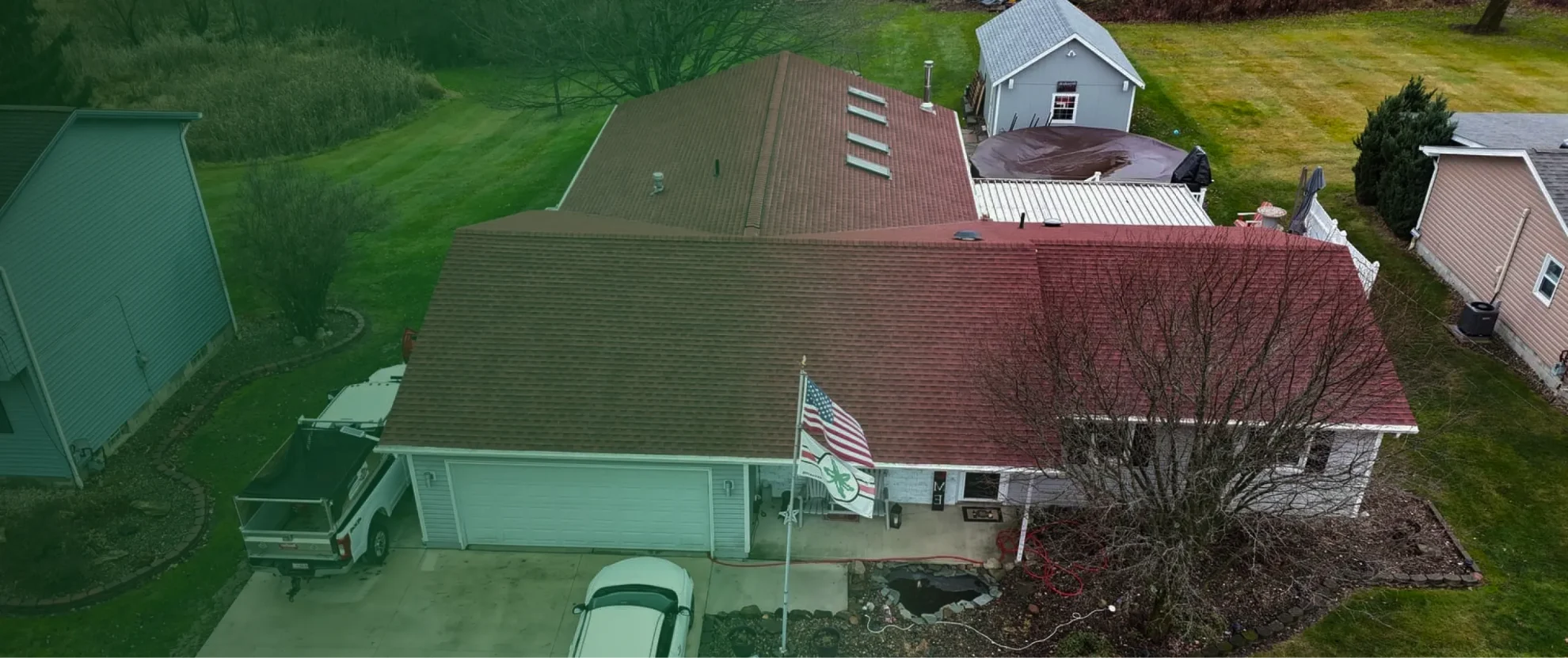
After high winds sweep through the Mahoning Valley, the most visible sign of storm damage is missing or damaged shingles. From the ground, scan your roof for any areas where shingles appear to be lifted, torn, or completely absent. You might notice dark patches where the underlying felt paper shows through, or edges curling upward instead of lying flat.
Wind damage often occurs in a pattern, typically starting at roof edges, ridges, and corners where wind pressure is strongest. In Trumbull County, spring windstorms frequently create what roofing contractors call “edge lift,” where the seal between shingle tabs breaks along the perimeter. Gable ends and ridge vents take the hardest hits because they face the prevailing westerly winds head-on. If you notice just one or two missing shingles, that’s still a concern. Even small gaps expose your roof deck to moisture, and water intrusion can spread quickly to surrounding areas during the next rainstorm.
You can conduct a safe ground-level inspection using binoculars. Stand back from your house at several angles to view all roof planes. Look for shingles that are creased, torn, or flapping in the breeze. Pay special attention to areas around roof-mounted equipment like satellite dishes or exhaust vents, where wind turbulence is strongest. Northeast Ohio’s spring storms often produce sustained winds of 40 to 60 miles per hour, more than enough to lift shingles that have lost adhesive strength over time.
Once felt paper is exposed, it degrades rapidly in our local humidity. The Mahoning Valley sees significant moisture year-round, and exposed underlayment can deteriorate in as little as 30 days during wet spring and fall months. What starts as a cosmetic issue becomes a structural threat as water seeps into the decking, leading to rot, mold growth, and compromised roof integrity.
Don’t wait to address missing shingles. What starts as a minor repair can escalate into structural damage if water seeps into the decking and attic space. Clear Roofing and Siding LLC offers prompt storm damage inspections to assess the full extent of wind damage and help you document it properly for insurance claims.
Granule Loss in Gutters and Downspouts
One of the easiest ways to detect hail damage without climbing onto your roof is to check your gutters. Asphalt shingles are covered with protective granules that shield the underlying asphalt from UV rays and weather. When hail strikes your roof, it can dislodge large amounts of these granules, which then wash into your gutters during the next rain.
Look for accumulations of dark, sand-like material in your gutters and at the bottom of downspouts. A small amount of granule loss is normal as shingles age, but if you find heavy deposits after a storm, especially if the granules look fresh and aren’t mixed with leaves and debris, that’s a red flag for hail impact.
You can distinguish storm-related granule loss from normal aging by examining the material closely. Fresh granule loss from hail appears clean and uniform in color, often concentrated in specific areas of the gutter system directly below the impact zones. Aged granules that naturally wash off over time are typically mixed with dirt, organic matter, and appear more weathered. Canfield sees hailstones ranging from pea-sized (one-quarter inch) to golf-ball-sized (1.75 inches) during severe spring and summer storms. Stones larger than one inch typically produce visible granule loss that you can spot in your gutters within hours of the storm.
The timeline between granule loss and shingle failure accelerates in Northeast Ohio’s freeze-thaw cycles. Once the protective granule layer is compromised, the asphalt mat underneath absorbs UV radiation and begins to dry out. During winter, moisture penetrates the exposed areas, freezes, and expands, creating microcracks. Over the course of just two or three winter seasons, hail-damaged shingles that might have lasted another decade can fail completely, requiring full roof replacement instead of targeted repair.
Losing granules accelerates shingle aging and reduces your roof’s ability to shed water effectively. Over time, exposed areas become brittle and prone to cracking. If you notice significant granule loss in your gutters after a storm, schedule a professional roof inspection right away. Our team documents this type of damage with photos that insurance adjusters recognize, making your claim process smoother.
Cracked or Lifted Flashing Around Chimneys and Vents
Flashing is the metal or rubber material installed around roof penetrations like chimneys, vent pipes, skylights, and where your roof meets a wall. It creates a watertight seal in these vulnerable transition areas. Storm winds can lift or bend flashing, and hail can crack or dent it, creating pathways for water to enter your home.
From the ground, use binoculars to inspect the flashing around your chimney and other roof penetrations. Look for sections that appear bent, separated from the surface, or have visible gaps. You might also notice rust stains or discoloration, which can indicate that water is already getting behind the flashing.
In Mahoning Valley homes, the most common flashing failure points are step flashing along dormers and valley flashing where two roof planes meet. Step flashing consists of individual L-shaped pieces woven between shingle courses and siding, and high winds can pry these pieces loose one by one. Valley flashing channels large volumes of runoff and takes a beating during heavy rains. When ice dams form during Canfield winters, the trapped water backs up under shingles and flashing, freezing and expanding in a cycle that bends metal and breaks sealant bonds. Chimney flashing is especially vulnerable because it has multiple components (base flashing, step flashing, counter flashing, and cricket flashing on larger chimneys) and each joint is a potential leak point.
Documenting flashing damage before interior leaks develop gives you a significant advantage when filing insurance claims. Adjusters are trained to look for interior water damage as proof of loss, but by the time stains appear on your ceiling, the damage has usually spread to roof decking, insulation, and framing. Professional roof inspection photos showing lifted or damaged flashing, along with moisture readings taken from the attic side, provide the documentation you need to get approval for repairs before secondary damage occurs.
Flashing damage is particularly insidious because leaks often don’t appear directly below the damaged area. Water can travel along roof decking or rafters before dripping into your living space, making the source difficult to trace. If you suspect flashing damage, don’t delay. Clear Roofing and Siding LLC specializes in chimney flashing repair and can reseal these critical areas before leaks develop. Our certified inspections include detailed documentation of all flashing issues for insurance purposes.
Interior Warning Signs: Attic and Ceiling Inspection
You don’t always need to go outside to spot storm damage. Your attic and interior ceilings can reveal problems that aren’t yet visible from ground level. A few days after a major storm, head up to your attic with a flashlight (during daylight hours works best). Look for any spots where daylight is visible through the roof boards, which indicates a breach in your roof’s protective layer.
Check for water stains, dampness, or a musty odor. Even if you don’t see active dripping, dark spots on the underside of your roof deck or along rafters signal that water has entered. Fresh water damage often appears darker or wet, while older damage may show as dried rings or streaks.
When conducting an attic inspection, safety comes first. Only step on ceiling joists or on plywood decking, never on insulation or the drywall between joists. If your attic has blown insulation, place a piece of plywood across the joists to create a safe walkway. Use a bright LED flashlight or headlamp so you can see into corners and along the underside of the roof deck. If you see any sagging or damaged framing, do not enter the space. Structural damage from heavy snow load or saturated decking can make attic areas unsafe, and a professional assessment is necessary.
Northeast Ohio’s attic ventilation challenges accelerate moisture damage after storms. Many older homes in Trumbull County lack adequate soffit and ridge venting, which means humid air gets trapped in the attic space. During winter, warm interior air rises and meets cold roof decking, causing condensation that looks nearly identical to leak stains. After a storm, this condensation problem intensifies because any new openings in the roof allow cold air and precipitation to enter, disrupting the thermal balance. You may see frost buildup on nails protruding through the roof deck on cold mornings, another sign of ventilation issues that compound storm damage.
Mold growth timelines in Trumbull County’s humidity are surprisingly short. With relative humidity often above 70 percent during spring and fall, mold spores can colonize damp wood and insulation in as little as 48 to 72 hours. Once established, mold spreads rapidly through organic materials. A roof leak that goes undetected for just two weeks can result in significant mold remediation costs on top of the structural repairs.
Inside your living spaces, inspect ceilings for new stains, sagging areas, or paint that’s bubbling or peeling. These are clear indicators that moisture is penetrating your roof system. Don’t assume a small stain is harmless. By the time water damage becomes visible inside your home, the problem has usually been developing for weeks or longer.
Clear Roofing and Siding LLC provides thorough attic inspections as part of our storm damage assessments. We trace leaks back to their source and provide detailed reports that satisfy insurance requirements while giving you a complete picture of needed repairs.
When to Call a Professional Roofing Contractor
While homeowners can spot many storm damage warning signs from the ground or attic, a professional roof inspection is the only way to assess the full scope of damage and determine whether you have a valid insurance claim. Roofing contractors have the training, equipment, and experience to safely access your entire roof and identify subtle damage that untrained eyes miss.
Call a professional immediately if you notice any of the signs discussed above: missing shingles, heavy granule loss, lifted flashing, or interior water stains. In Northeast Ohio, timing matters. Most insurance policies require you to report storm damage within a specific window, and delays can jeopardize your coverage. Additionally, temporary damage can worsen quickly when the next storm arrives.
Clear Roofing and Siding LLC offers certified roof inspections with complete photo documentation and written findings. We’ve helped countless Canfield-area homeowners navigate the insurance claims process, working directly with adjusters to ensure all storm damage is recognized and covered. Our team understands the damage patterns specific to Mahoning Valley weather, from spring windstorms to winter ice dams, and we know exactly what to document for successful claims.
After your inspection, we provide a detailed report outlining all damage, recommended repairs, and a timeline for restoration. Whether you need a few shingle replacements or a full roof replacement, we handle projects of every size with the same attention to quality and customer care that’s earned us a 5-star reputation throughout Trumbull County.
Don’t let storm damage go unchecked. Contact Clear Roofing and Siding LLC today at (330) 774-9093 or visit our contact page to schedule your free storm damage inspection. We’ll help you protect your home and navigate the insurance process with confidence.