
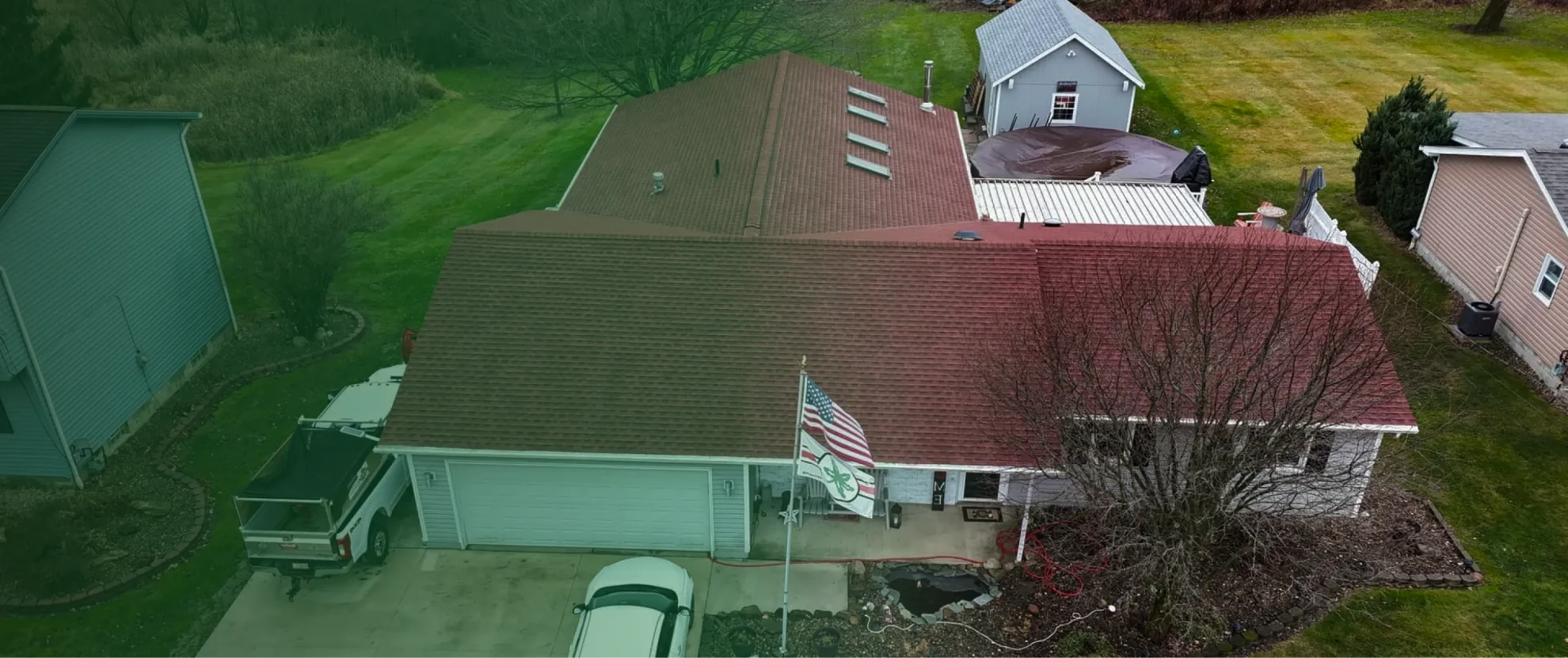
How to Spot Roof Storm Damage: A Step-by-Step Guide for Homeowners
Start with a walk-around from the ground

Start your inspection from the safety of the ground. Walk around your entire home and look up at the roof from all angles. You’re checking for obvious signs like missing or displaced shingles, dented or detached gutters, and debris scattered in your yard.
In Boardman, Campbell, and Poland, spring windstorms often tear shingles loose or lift edges, creating entry points for water. Look for shingle granules collecting in gutters or downspouts; this signals that your roof’s protective layer is wearing away after impact. Pay close attention to ridge caps along the peak of your roof and corner shingles on west-facing slopes, where wind hits hardest in the Mahoning Valley.
Check your siding too while you’re walking the perimeter. Hail can dent vinyl siding and crack soffit panels, and high winds may loosen trim boards. Document everything you see with your phone’s camera, noting the date and which side of the house shows damage.
When photographing damage, take close-up shots that clearly show missing shingles, torn edges, or exposed nail heads. Capture wider shots that show the location of damage on your roof and help insurance adjusters understand the scope. Photograph ground debris next to a reference object like a ruler or coin for scale. Note the exact date of the storm that caused the damage, because insurance companies need to tie your claim to a specific weather event. Keep all your photos organized in a folder labeled with the storm date and your address.
Check your attic for leaks and light
Head into your attic with a flashlight on a sunny day. Look at the underside of your roof decking for water stains, dark spots, or daylight peeking through gaps. These are telltale signs that storm damage has compromised your roof’s barrier.
Northeast Ohio’s freeze-thaw cycles make small leaks worse fast. A crack that lets in a trickle during a spring rainstorm can turn into a stream when snow melts and refreezes. Check for dampness around chimneys, vent pipes, and where roof planes meet; these are the most vulnerable spots.
If you spot mold, sagging decking, or soaked insulation, don’t wait. Water damage spreads quickly and leads to expensive structural repairs. Take photos of every problem area, and mark the calendar date when you first noticed it. This documentation is essential for insurance claims.
Practice safe attic inspection techniques. Step only on joists or plywood planks, never on insulation or drywall between joists. Wear a dust mask to avoid breathing insulation fibers. Use a bright LED flashlight to illuminate dark corners and trace water stains back to their source. Water travels downhill along rafters and decking before dripping onto insulation, so the visible stain may be several feet away from the actual leak point. Follow the stain uphill to find where water entered. In Northeast Ohio, the best times for attic checks are after spring thaws when ice dam damage becomes visible and after heavy summer storms before winter weather sets in and hides problems under snow.
Inspect gutters and flashing closely
Gutters and flashing take a beating in storms, and damage here often goes unnoticed until leaks appear inside. From the ground, look for gutters that sag, pull away from the roofline, or have visible dents. Check downspouts for clogs caused by shingle granules or broken pieces of roofing material.
Flashing (the metal strips around chimneys, skylights, and roof valleys) is critical for keeping water out. Wind can lift flashing edges, and hail can crack or dent it. In the Mahoning Valley, ice dams during winter can also wrench flashing loose, leaving gaps that let spring rains seep under your shingles.
If you see rust, separation, or bent metal, that’s a red flag. Clear Roofing and Siding LLC handles chimney flashing repair and full gutter services for homeowners throughout Campbell, Boardman, and Poland. Catching flashing problems early prevents the kind of water intrusion that rots fascia boards and soaks walls.
You can test gutter function safely from the ground using a garden hose. Run water into the gutter at the end farthest from the downspout and watch how it flows. Properly functioning gutters will carry water smoothly toward the downspout without overflowing or pulling away from the fascia board. Look for granule loss at the base of your downspouts after a storm. You’ll see dark sandy sediment that looks like coarse pepper; this is the protective mineral coating washing off damaged shingles. Homeowners in Poland and Boardman should also inspect gutter hangers for storm damage. Visible gaps between the gutter and fascia board, sagging sections that no longer slope properly toward downspouts, and bent hanger straps all signal that high winds have compromised your gutter system’s ability to protect your home.
Schedule a professional roof inspection
Even if your ground-level and attic checks don’t reveal obvious damage, a professional roof inspection is the smart next step after any significant storm. Licensed roofing contractors know exactly what insurance adjusters look for, and they can spot subtle damage (like bruising on shingles or hairline cracks in flashing) that homeowners miss.
Clear Roofing and Siding LLC offers free storm damage inspections for homeowners in Campbell, Boardman, Poland, and across the Mahoning Valley. We document every issue with photos and written reports, giving you the evidence you need to file a successful insurance claim if damage is found.
Roof inspections also catch problems that haven’t caused leaks yet but will soon. A few missing shingles today become interior water damage next season. Professional inspections give you a clear picture of your roof’s condition and a plan to address repairs before small issues turn into expensive emergencies.
During a professional roof inspection, the contractor walks the entire roof surface to examine every section up close. They test shingle adhesion by lifting edges gently to check for wind damage, measure hail impact diameter with gauges to document severity, and inspect flashing seal integrity around every penetration and transition. The inspection report includes specific measurements, impact counts per square foot, and detailed photos with annotations that insurance adjusters require to approve claims. Clear Roofing’s inspection process covers not just the roof itself but also storm damage to fascia, soffit, and siding that homeowners often overlook. These elements are frequently covered under the same insurance claim as roof damage, and documenting all storm-related issues in one comprehensive report helps you maximize your coverage and avoid out-of-pocket expenses for repairs that should be included in your claim settlement.
Act fast and work with your insurance
Once you’ve identified storm damage, act quickly. Contact your insurance company to report the damage and start a claim. Most policies require prompt notification, and delays can complicate coverage. Keep all your documentation organized: photos, dates, inspection reports, and repair estimates.
Work with a local roofing contractor who has experience navigating insurance claims. Clear Roofing and Siding LLC works directly with insurance companies throughout the claim process, helping homeowners in Campbell, Boardman, and Poland get the coverage they deserve for storm damage roof repair and full roof replacement when needed.
Don’t let storm damage linger. Small problems grow fast in Northeast Ohio’s weather. Missing shingles let water under your roof deck, cracked flashing channels rain into your walls, and damaged gutters dump water against your foundation. Timely repairs protect your home’s structure and your family’s comfort, turning storm damage into a fully restored home that’s ready for whatever weather comes next.
Follow a specific timeline for acting after storm damage to protect your claim and your home. Document damage within 48 hours while the storm date is fresh in your memory and physical evidence is clear. File your insurance claim within one week of discovering damage; most policies have notification deadlines that start when you become aware of the problem. Schedule a professional inspection within two weeks before weather exposure degrades evidence like shingle bruising or lifted flashing edges. Clear Roofing assists with claims by meeting adjusters on-site, walking them through every damaged area, and providing detailed repair estimates formatted to match insurance scope requirements. We speak the language adjusters understand and ensure nothing gets missed during their assessment. Campbell, Boardman, and Poland homeowners can schedule a free storm damage inspection today to protect their investment, document problems before they worsen, and avoid surprise out-of-pocket costs that arise when small damage turns into major repairs because it went unaddressed for too long.