
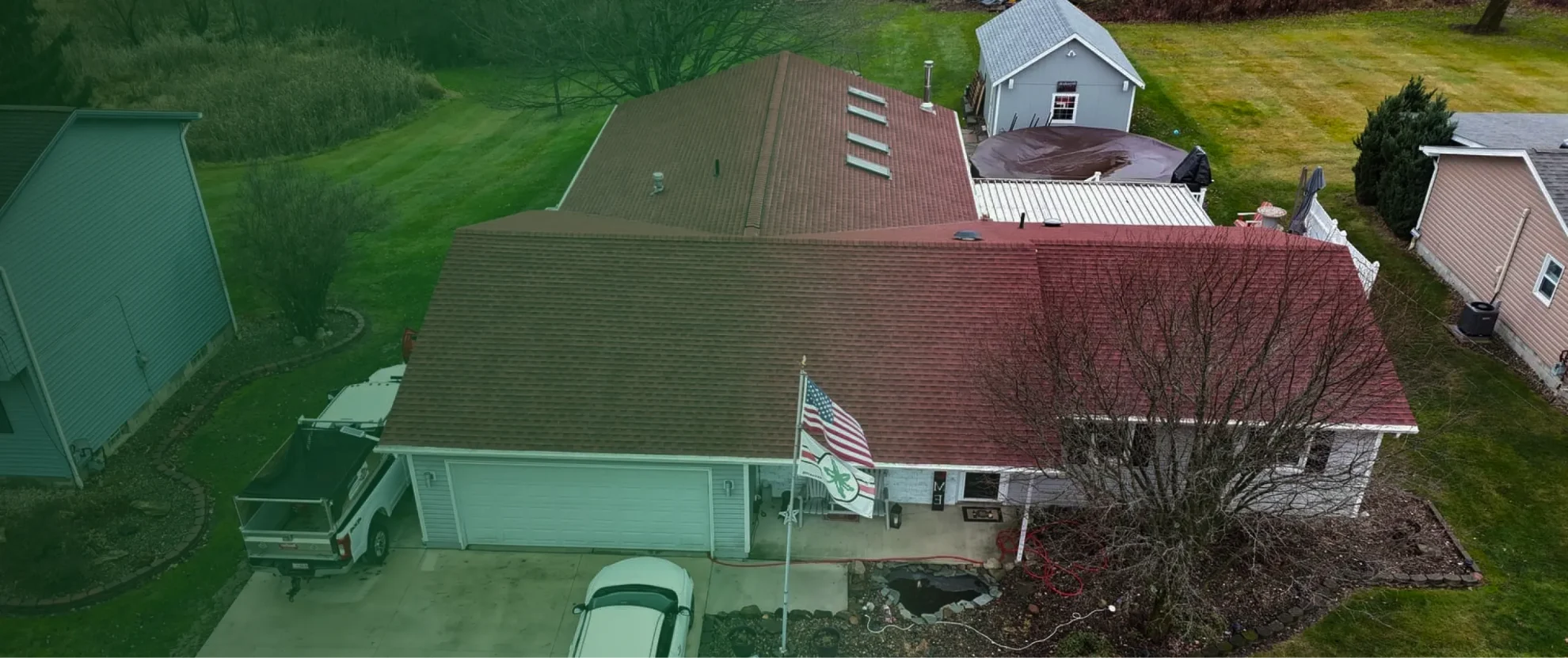
How Much Does a New Roof Cost in 2026? OH

What’s included in a roof replacement estimate
If you’re a homeowner in the Mahoning Valley researching roof replacement costs, you’re likely seeing wildly different estimates online. Some sources say $5,000, others say $25,000, and you’re left wondering what your actual roof will cost.
Here’s the truth: in Northeast Ohio, most full roof replacements range from $8,500 to $18,000 for an average-sized home (1,500 to 2,000 square feet). That range accounts for different materials, roof complexity, and the quality of installation. Understanding what drives those numbers helps you budget realistically and avoid contractors who lowball estimates only to pile on charges later.
Your roof’s cost depends primarily on three factors: the square footage of your roof (not your home’s floor plan), the materials you select, and the complexity of your roof’s design. A simple ranch-style home with minimal angles costs far less to roof than a multi-story home with valleys, dormers, and multiple chimneys.
How roofing materials affect your total investment
Material selection is where most homeowners can control their roof replacement cost, but it’s also where you balance upfront price against decades of performance. In the Mahoning Valley, your roof faces freeze-thaw cycles, ice dams, high winds, and heavy snow loads. The material you choose needs to handle all of that.
Asphalt shingles remain the most popular choice for good reason. Three-tab asphalt shingles start around $3.50 to $5.50 per square foot installed, making them the most budget-friendly option. They’re adequate for basic protection and come with 20 to 25-year warranties. However, architectural (dimensional) shingles, at $4.50 to $7.50 per square foot, offer better wind resistance, longer warranties (30 to 50 years), and a more dimensional appearance that boosts curb appeal. For most Canfield-area homes, architectural shingles hit the sweet spot of performance and value.
Metal roofing costs significantly more upfront (typically $8 to $14 per square foot installed), but it’s nearly maintenance-free, lasts 40 to 70 years, sheds snow easily, and can reduce cooling costs in summer. For homeowners planning to stay in their home long-term, metal roofing often proves more economical over its lifespan than replacing asphalt shingles twice.
Premium options like synthetic slate or cedar shake alternatives run $10 to $18 per square foot but deliver specific aesthetic goals and exceptional durability. These make sense for historic homes or when matching existing architectural character matters.
The components that protect your investment
The difference between a $9,000 estimate and a $14,000 estimate for the same roof often comes down to what’s included beneath and around the shingles. Unfortunately, some contractors omit these critical components to appear cheaper, leaving you with a roof that fails prematurely or doesn’t meet code.
Roof tear-off and disposal typically add $1 to $3 per square foot to your project. Some contractors include this in their base price; others list it separately. Always clarify whether your estimate includes removing and disposing of your old roof. In most cases, going down to bare decking is essential for inspecting and repairing the underlying structure.
Underlayment quality matters enormously in Northeast Ohio. Basic felt paper costs less, but synthetic underlayment provides superior water resistance, won’t tear as easily during installation, and lasts longer. Expect to pay an additional $0.50 to $1.50 per square foot for premium underlayment. Ice and water shield along eaves, valleys, and around penetrations is non-negotiable in our climate. This rubberized membrane prevents ice dam damage and should extend at least three feet up from the eave edge.
Decking repairs often surprise homeowners. Once the old roof comes off, contractors may discover rotted or damaged plywood sheathing (usually from old leaks). Replacing damaged decking runs $3 to $6 per square foot of affected area. A reputable contractor will identify this during a pre-installation inspection when possible, but sometimes damage only becomes visible after tear-off.
Ventilation upgrades frequently get overlooked. Proper attic ventilation extends shingle life, prevents ice dams, and reduces cooling costs. If your home lacks adequate ridge vents, soffit vents, or needs additional roof vents, adding these runs $300 to $1,200 depending on the scope. It’s worth the investment.
Flashing replacement around chimneys, skylights, walls, and plumbing vents is another area where corners get cut. Reusing old, corroded flashing is a recipe for leaks. Quality flashing work adds $150 to $400 per chimney or major penetration but prevents the most common leak points.
How your home’s design affects pricing
Your roof’s design dramatically impacts labor costs and overall project expense. A simple gable roof on a ranch home with easy access and minimal penetrations installs quickly and efficiently. A multi-level home with steep pitches, multiple valleys, dormers, skylights, and difficult access can double the labor hours required for the same square footage.
Roof pitch (steepness) affects pricing because steeper roofs require additional safety equipment, slow down work, and increase difficulty. Roofs with a 6/12 pitch or less install at standard rates. Pitches of 7/12 to 9/12 typically add 10% to 20% to labor costs. Anything steeper may require specialized equipment and staging, adding 20% to 40% or more.
The number of roof planes, valleys, and transitions increases both material waste and labor complexity. Valleys require careful flashing and shingle weaving or cutting. Each dormer, hip, and ridge adds detail work. A 2,000-square-foot roof with a simple design might take two days to install, while a 2,000-square-foot roof with eight dormers and multiple levels could take four to five days.
Height and accessibility matter too. Single-story homes allow easier material staging and safer working conditions. Multi-story homes require more safety precautions, careful material handling, and sometimes scaffolding or specialized staging. Homes with landscaping, decks, or pools close to the roofline require extra care (and time) to protect those features during the project.
In the Canfield and Northeast Ohio market, labor for roof installation typically represents 40% to 60% of your total project cost. Experienced, insured roofing contractors charge what their skill and reliability are worth. Extremely low bids often signal shortcuts, underinsured contractors, or crews that will vanish when problems arise.
Choosing a contractor you can trust
Now that you understand what drives roof replacement costs, how do you get an accurate, trustworthy estimate? The key is working with local, established roofing contractors who provide detailed, written proposals and transparently break down every cost component.
Start by requesting on-site inspections from at least three licensed, insured contractors. Phone estimates or quick visual assessments from the ground rarely capture the full scope. A thorough inspection includes measuring your roof, examining current condition, checking attic ventilation, identifying needed repairs, and discussing material options that fit your budget and goals.
A quality estimate should itemize materials (including brand and grade), labor, tear-off and disposal, underlayment type, ventilation work, flashing, permits, and warranty details. Vague, single-number bids make it impossible to compare contractors or understand what you’re actually paying for. Ask questions about anything unclear. Reputable contractors welcome questions and explain their approach.
Watch for red flags: contractors who pressure you to decide immediately, require large upfront deposits (more than 10% to 20%), lack proper insurance, or offer prices dramatically below competitors. In roofing, you truly get what you pay for. An experienced contractor prices the job to do it right the first time, using quality materials and skilled labor.
Verify that estimates include permits (required in most Ohio municipalities), adequate insurance coverage (both liability and workers’ compensation), and clear warranty terms covering both materials and workmanship. Material warranties come from manufacturers, but workmanship warranties (typically 5 to 10 years) come from your contractor. A contractor who stands behind their work demonstrates confidence in quality.
Clear Roofing and Siding LLC provides homeowners throughout the Mahoning Valley with detailed, transparent estimates that break down every aspect of your roof replacement project. We measure carefully, explain your options honestly, and never surprise you with hidden charges. Our team understands how Northeast Ohio weather impacts roofing decisions and builds every roof to handle our climate’s challenges. Whether you’re comparing estimates or ready to move forward, we’re here to help you make the best decision for your home and budget.